

The Most Common Engine Problems and How to Fix Them

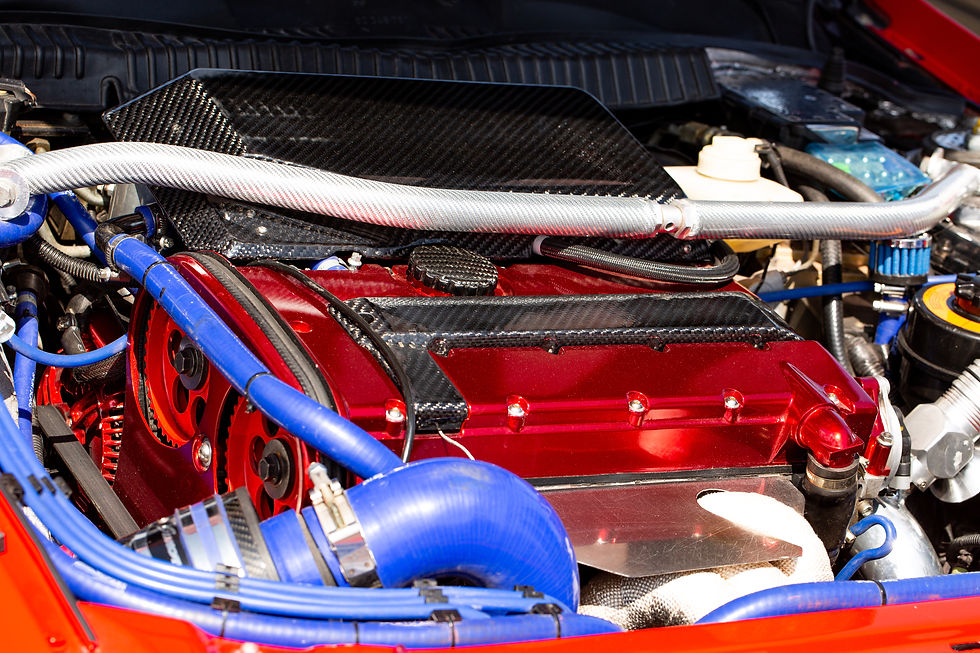
Keeping your engine running smoothly is crucial for both your safety and your wallet. Unfortunately, common engine problems can strike at any time—often when you least expect them—and lead to hefty repair bills. The good news? Many issues present clear warning signs and have straightforward (and affordable) solutions. In this guide, we’ll walk you through the four most frequent engine troubles, explain how to recognize each one, and show you the repair steps—whether you’re a DIY enthusiast or you prefer bringing your car to a pro. Let’s dive in!
Starting Common Engine Problems and Hard Starts
Engines that struggle to start are among the most typical common engine problems. Whether it’s a chilly Montreal morning or your car has sat idle for weeks, difficulty firing up often stems from one of three culprits: the battery, the spark plugs, or the fuel delivery system.
Few things are more frustrating than turning the key and hearing only a click—or worse, nothing at all. Below, learn how to diagnose and remedy each root cause so you can get back on the road without delay.
Weak or Dead Battery
A tired battery is the #1 cause of no-start situations.
Symptoms: Clicking sound when you turn the key, dim dashboard lights, slow cranking.
Diagnosis: Measure resting voltage with a multimeter—anything under 12.4 V means the battery is weak. Perform a load test (many auto parts stores offer this free) to assess its “state of health.”
Fix:
Recharge the battery fully with a smart charger.
Clean and tighten the battery terminals to eliminate corrosion.
Replace any battery older than 4–5 years or one that fails a load test.
Worn or Fouled Spark Plugs
Spark plugs ignite the air–fuel mixture; worn plugs lead to hard starts and rough idling.
Symptoms: Misfires, black soot on exhaust, sluggish acceleration, Check Engine Light.
Diagnosis: Remove a spark plug and inspect the tip. A light tan color is normal; heavy black deposits or oil fouling call for replacement.
Fix:
Install new plugs per manufacturer recommendations (often NGK or Denso).
Gap them correctly to factory specs.
Inspect ignition coils or plug wires for damage and replace if needed.
Fuel Delivery Issues
An engine starves without proper fuel flow, leading to startup delays and sputtering.
Symptoms: Engine cranks but won’t fire, stalling immediately after start, fuel smell.
Diagnosis:
Replace the fuel filter if it’s over 50,000 km old.
Test fuel pump pressure with a gauge—typical range is 3–5 bar.
Fix:
Change the fuel filter on schedule.
Test and replace the fuel pump if pressure is low.
Clean or replace clogged fuel injectors to restore proper spray pattern.
Overheating and Coolant Leaks
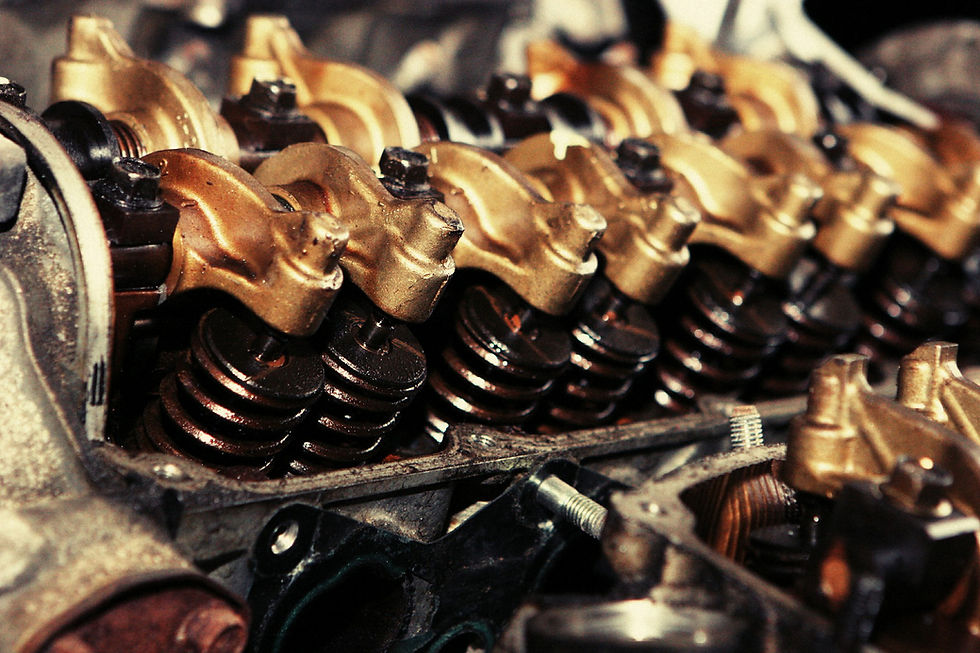
An overheating engine is one of the most serious common engine problems—left unchecked, it can warp heads, blow head gaskets, or seize the engine entirely. Early detection of coolant leaks or faulty thermostats can save you thousands.
When the temperature gauge climbs toward the red zone, immediate action is essential. Below, we cover leaks, thermostat failures, and water pump issues—plus quick fixes to keep you cool.
Radiator and Hose Leaks
Rubber hoses dry out over time, and radiators corrode, causing slow leaks.
Symptoms: Puddles of green or pink fluid beneath the car, steam from under the hood, rapid temperature rise.
Diagnosis: Perform a coolant pressure test (10–20 psi) to pinpoint leaks. Inspect hoses for cracks and the radiator for corrosion.
Fix:
Replace worn hoses and tighten clamps.
Repair or swap out a corroded radiator.
Check the radiator cap—a weak cap can’t hold proper pressure.
Faulty Thermostat
The thermostat controls when coolant flows; a stuck thermostat prevents proper temperature regulation.
Symptoms: Temperature gauge spikes then drops unexpectedly, engine takes forever to warm up.
Diagnosis: With a cold engine, feel the upper radiator hose—if it warms before the thermostat’s rated opening temperature (usually ~80 °C), it’s stuck open or closed.
Fix:
Replace the thermostat with a quality OEM part.
Flush and refill the cooling system with fresh coolant.
Water Pump Wear
The water pump circulates coolant; a failing pump leads to overheating and potential engine damage.
Symptoms: Grinding or whining noises from the front of the engine, coolant leaks at the pump seal, overheating under load.
Diagnosis: Inspect for leaks around the pump housing and check bearing play by wiggling the pulley.
Fix:
Swap out the water pump—often done alongside timing belt service.
Replace drive belts and inspect pulleys to ensure smooth operation.
Power Loss and Hesitation
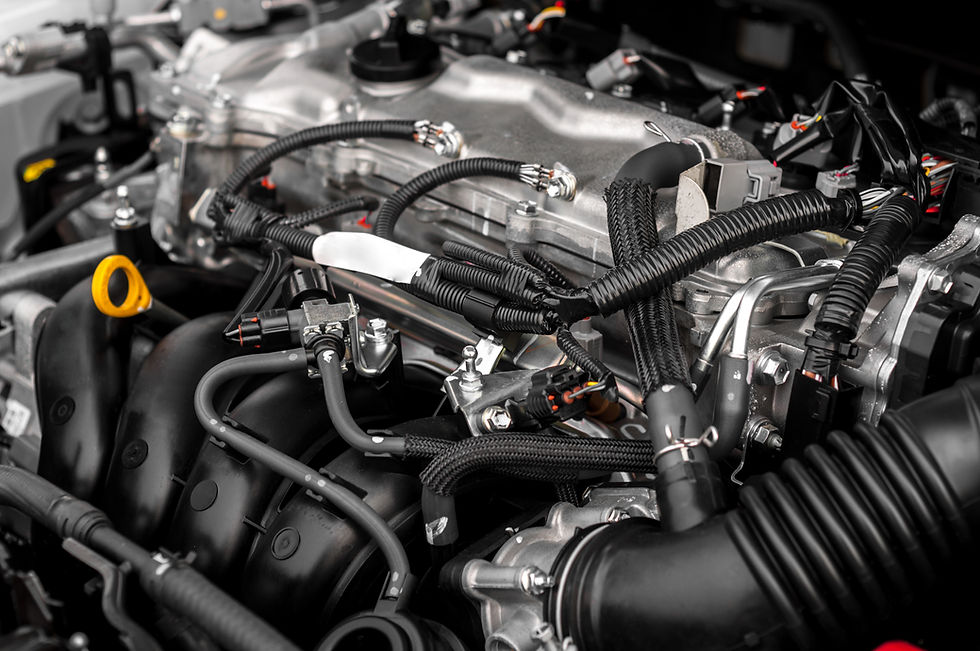
Nothing spoils confidence on the road like an engine that hesitates under throttle. Power loss is among the most maddening common engine problems, but it usually traces back to one of three areas: airflow sensors, fuel pressure, or injectors.
Whether merging onto the highway or climbing a hill, your engine must respond instantly. Follow these diagnostics to restore full power.
Dirty Mass Airflow (MAF) Sensor
The MAF sensor measures incoming air; contamination throws off the air–fuel ratio.
Symptoms: Stumbling on acceleration, rough idle, high fuel consumption.
Diagnosis: Remove and spray the sensor element with dedicated MAF cleaner. If performance doesn’t improve, replace it.
Fix:
Clean carefully—don’t touch the delicate wires.
Install a new sensor if cleaning fails to restore proper readings.
Low Fuel Pressure
Insufficient fuel pressure starves the engine when demand rises, causing sag under acceleration.
Symptoms: Sluggish throttle response, sputtering at high load, occasional misfires.
Diagnosis: Hook up a fuel pressure gauge to the fuel rail—compare readings to factory specs (commonly 3–5 bar).
Fix:
Replace the fuel pressure regulator if readings are erratic.
Swap the fuel pump if it fails to maintain pressure.
Clogged Fuel Injectors
Dirty injectors spray unevenly, creating lean or rich conditions that hamper performance.
Symptoms: Pinging under load, rough acceleration, black smoke on decel.
Diagnosis: Have a shop perform a flow test or use a high-grade injector cleaner additive.
Fix:
Use injectors cleaner per manufacturer instructions.
Have injectors professionally ultrasonically cleaned or replace if badly fouled.

Abnormal Noises and Vibrations
Unusual sounds and excessive vibrations often herald the most severe common engine problems—from worn bearings to valve train issues to broken engine mounts.
Your car “talks” through its noises. Learn to interpret clicks, knocks, and shakes so you can address issues before they become catastrophic.
Valve Train Ticking
Excessive valve lash or worn lifters produce a distinct ticking at idle.
Symptoms: Rhythmic tick-tick-tick at low RPM, often louder on cold starts.
Diagnosis: Check valve clearance and inspect lifters.
Fix:
Adjust valve lash to spec.
Replace lifters if they’re worn or noisy.
Rod Knock and Bearing Wear
Deep knocking under load often indicates worn rod or main bearings—a repair-critical scenario.
Symptoms: Heavy knocking that intensifies with RPM, metallic clatter.
Diagnosis: Use a chassis stethoscope to localize the sound; inspect oil analysis for metal debris.
Fix:
Engine teardown to replace bearings and inspect the crankshaft.
Machine or polish the crank journals if necessary.
Broken or Worn Engine Mounts
Failing mounts transmit engine vibration into the cabin and can misalign belts.
Symptoms: Excessive shake at idle, clunks when shifting gears.
Diagnosis: Visually inspect mounts for cracks, fluid leaks (on hydraulic mounts), and excessive engine movement when revving with the brake applied.
Fix:
Replace mounts with OEM or upgraded polyurethane units.
Check transmission mounts at the same time to ensure overall stability.
Conclusion
Engine trouble doesn’t have to mean panic—or a massive repair bill. By understanding these common engine problems—hard starts, overheating, power loss, and strange noises—you can diagnose issues early, tackle DIY fixes, or work with a trusted mechanic to keep costs down. If you ever feel out of your depth, remember: Centre de mécanique Cité Auto in Montréal is here to help. Our certified technicians combine friendly service with expert diagnostics to get you back on the road quickly and confidently.